Genetics

User avatar
Admin
Site Admin
Posts: 1036
Joined: Tue Dec 23, 2025 8:19 am
Answers: 0
Location: Nederland

Genetics

Post by Admin »

Genetics and Hereditary Visual Traits in Paralives

Alex Massé — Creator
August 8, 2025

Happy Friday, Anna here!

Today I’m talking about the genetics system in Paralives, something we’ve been working on for a long time (since 2020… time flies!). I recently revisited the entire system to make it work with all the Paramaker updates since then and to integrate it into pregnancy gameplay. A perfect chance to show how it works in action!

Image


🧬 Different Types of Hereditary Traits

In real life, our appearance is influenced by the genes we get from our parents and many environmental factors. Don’t worry if you don’t remember biology about dominant and recessive genes — there’s no test!

Our challenge in Paralives was to create a system where players can reasonably recognize traits passed through generations of Paras without using overly complicated genetic rules. It should feel believable, with some fun details (for those who remember Punnett squares 👀), but remain light and consistent with character customization.

We use different inheritance rules depending on the type of trait, and here we focus only on visual traits. Let’s take a look!


1. Facial Features: Directly from One Parent

Our goal for hereditary facial features is simple and far less complex than real genetics. We want the player to be able to say:
“They have their mother’s nose!” or “They have their father’s jawline!”

How it works:
For each facial feature (like nose, chin, etc.), the child inherits all relevant sliders from one parent, chosen randomly. Example: mother’s nose, father’s cheeks. This keeps everything coherent and avoids strange slider mixes that could produce ugly or extreme results.

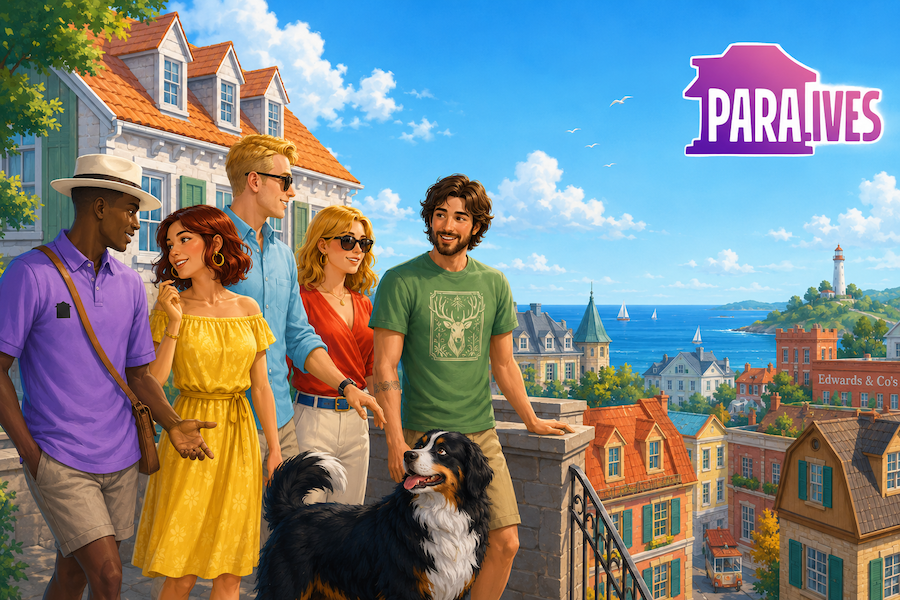
Here’s our favorite couple from the trailer with their two kids, made using Paramaker genetics tools. Aren’t they cute?

Image

2. Height: Partly from Parents, Mostly Random

Changing height is a central element in Paralives. Since the beginning of development, we’ve tried to implement this. Different heights make characters unique and the world diverse and lively.

Goal: Show inheritance of height but also add variation so children of the same parents aren’t exactly the same height. Players can think:
“This family has giant genes!” or “This child grew taller than both parents!”

How it works:
We divide height into three categories: short, medium, and tall, with different ranges depending on the Para’s sex (like real statistics). When generating a child, one parent category is chosen randomly, and an exact value is picked within that range. A Para can be “tall like the mother” without being exactly the same height.

Note: In Paramaker, you can make a child from two parents of the same sex, but in gameplay, the parent pair always consists of one Para who can become pregnant and one who can impregnate others (adjustable per character).

Image

3. Eye Color, Skin Color, Hair Color & Texture, Freckles: Dominant and Recessive Genes

For these traits, we wanted a slightly more complex system reflecting simplified dominant/recessive models. These are the only traits that can skip a generation.

How it works:
We created a simple gene and allele system. Some traits are dominant (one copy of the gene is enough, e.g., brown eyes), others recessive (two matching alleles needed, e.g., blue eyes). Hair type has four alleles: straight, wavy, curly, or coily; coily is dominant, straight is recessive.

Example: A Para gets one curly allele from the mother and one wavy from the father → the Para gets curly hair (randomly chosen from our curl styles). The recessive wavy gene may appear again in their child.


👩‍💻 Applying the Genetics System
• New Para in Paramaker: the game analyzes current traits and determines genetic data for appearance. “Unnatural” traits (like pink eyes) are assigned randomly.
• Child of two parents: both in Paramaker and Live mode, the game generates a child according to inheritance rules.
• Adding a parent or sibling: existing genetic data is used for coherence.

Not yet implemented: an advanced genetics interface for players who want to customize everything.

Note: Babies and toddlers don’t have access to all sliders yet; they look generic at first. Their genetic data is calculated and stored, becoming visible as they grow.

Image


🛠️ Modding DNA

As with most systems in the game, genetics is moddable. You can add, remove, or adjust traits, set hereditary sliders, etc.

Examples:
• New alien species with green and grey skin (green dominant)
• Making unnatural colors inheritable (like bright pink eyes)
• Making new accessories inheritable (like horns or Shrek ears)


There are many small details we’re still working on to make children as believable as possible, but I hope you enjoyed this tour through the genetics system!

Have a great weekend,
Anna

Edit – January 8, 2026: this post is now public, feel free to share!
Image

Join us on Discord

Return to “Zois 👫”